
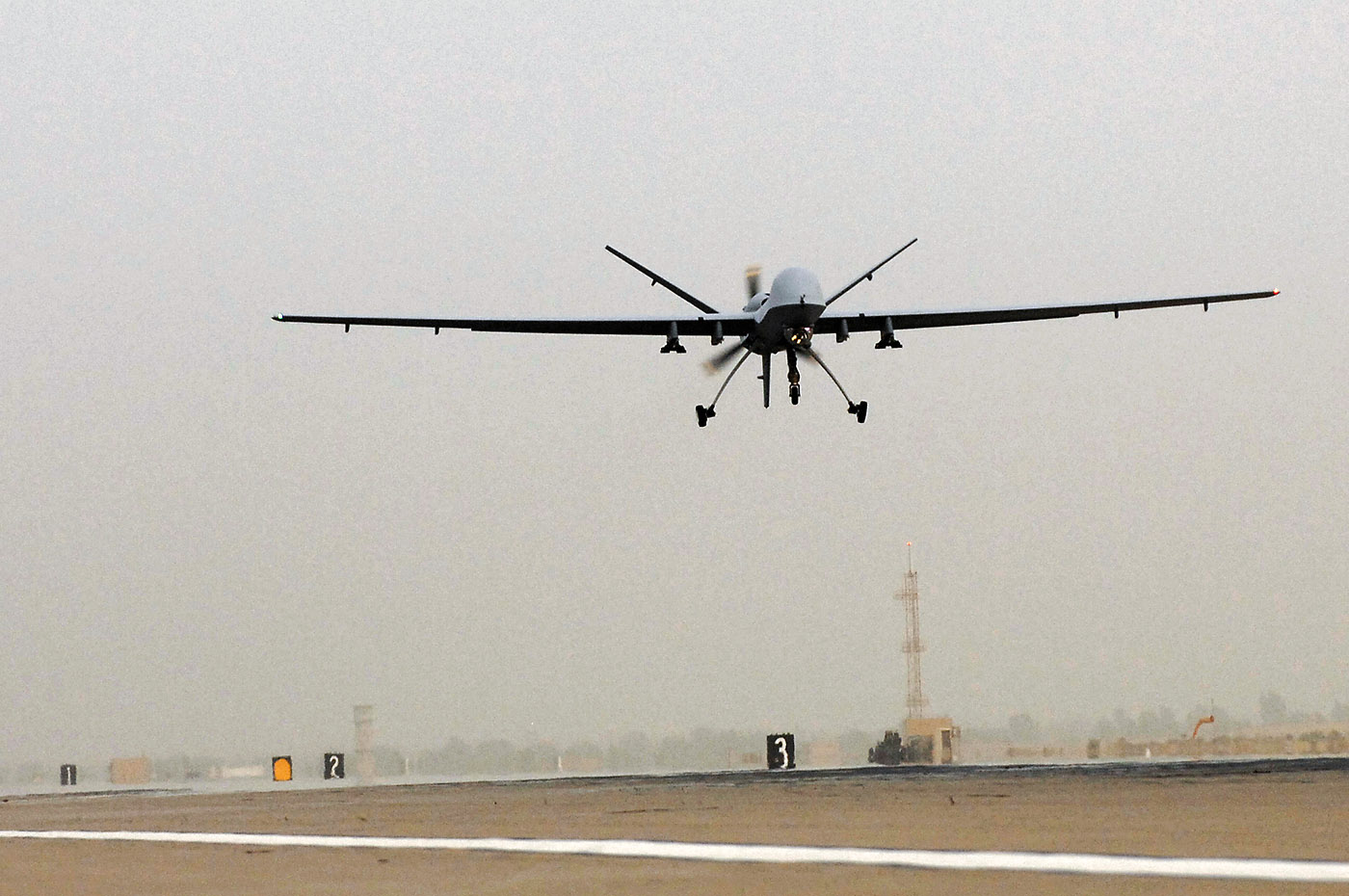


PAX is investigating the effect of deploying armed drones on the security of civilians.
Drones are remotely controlled aircraft which are used in an increasing rate in and outside of armed conflict. Since 2001, thousands of people have died in extra-judicial executions carried out by the United States in Pakistan, Yemen and Somalia. Hundreds of these were innocent civilians, including many children.
There are judicial, moral and military-strategic obligations to the use of armed drones. Frequent use of drones has led to psychological traumatized communities in Pakistan and Yemen. Often times, drone strikes take place outside of warzones, without a public trail or transparency regarding the targets. This is undermining principles of international law regarding the legitimate use of armed violence.
The use of drones also offers several advantages. They can be controlled remotely without risks for the pilot, they can fly around for longer periods of time and can disarm explosives. Drones can also gather intelligence on the presence of civilians, enabling them to strike with more accurately. This makes the drone seem as a simple solution for the protection of soldiers, civilians, and the destruction of military targets. However, limiting the use of drones is necessary to combat excessive and illegitimate use, especially in counterterrorism operations.
An increasing number of states are using armed drones, and are able to follow the example set by the United States. This is threatening to the security of civilians and international law. Improved regulation and control of proliferation is necessary. Armed groups and terrorist are increasingly using armed commercial drones in their attacks.
More Transparency and Accountability
PAX is encouraging public debate and is investigating judicial, ethical and military-strategic questions surrounding the use of drones. Furthermore, PAX is calling for the Dutch government to clarify their legal position on the use of force by armed drones, especially in counter-terrorism operations. Furthermore, PAX is pleading for more transparency, accountability and increased regulation of the use and export of drones, both on a national and international level.
PAX is also encouraging the government of the Netherlands to articulate a clear position regarding the export and use of drones, for example in the European Union and the United Nations. In support of this objective, PAX is working together with other organizations through the European Forum on Armed Drones.
The work of PAX on armed drones is funded by the Open Society Foundation.
Contact information
Wim Zwijnenburg, Programme Leader Humanitarian Disarmament, zwijnenburg@paxforpeace.nl
- Does unmanned make unacceptable? Exploring the Debate on using Drones and Robots in Warfare
- Armed and Dangerous, PAXs position on the use of armed drones
- Unmanned and Uncontrolled - Proliferation of unmanned systems and the need for improved arms export control
- Emerging Unmanned Threats: The use of commercially-available UAVs by armed non-state actors
- The European Forum on Armed Drones (EFAD) Call to Action
- Unmanned Ambitions - Security implications of growing proliferation in emerging military drone markets
- Human Rights and Human Realities (2019)
- Military Drones and the EU (2019)
Activiteiten & resultaten
Report Unmanned Ambitions
The report Unmanned Ambitions signals a growing interest in building cheap, reliable and easy-to-deploy military drones. This raises the question: how long before we will see the first AK-47 version of an armed drone?
PAX urges states to clearly define their legal position on the use of lethal force with drones, particularly in areas outside of official battlefields, and work toward building a normative and regulatory framework for the use and proliferation of drones.
Global Ambitions for Armed Drones
In 2016, the United States initiated a process to create a ‘Joint Declaration’ in order to improve the control on the use and export of armed drones. However, civil society organizations and human rights experts have expressed their concern regarding the weak and vague language in this document. PAX is encouraging participating countries to develop a forceful, judicially binding instrument which can be used to effectively regulate the use and export of armed drones, in order to safeguard basic principles of international law.
Coordinating EFAD
PAX is coordinating the European Forum on Armed Drones (EFAD). EFAD is a civil society network of organisations working together to challenge the growing global use of armed drones and to address key concerns regarding their deployment and proliferation, through engaging with governments, European institutions and civil society, and by promoting political and public debate.
Report Unmanned and Uncontrolled
Existing arms export controls are currently failing to provide an adequate response to the increasing use and export of both military and civilian drones. In the report Unmanned and Uncontrolled PAX provides a number of recommendations to strengthen the control on export of drone-technology and calls for a wide debate over the use of armed unmanned systems in and outside conflict areas.
Policy Recommendations
PAX drafted policy recommendations on using armed and unarmed drones and is working on a more stringent monitoring of drone technology exports.
Research
PAX has done research on what the deployment of drones means for human security. You can find the results in a report entitled ‘Does Unmanned make Unacceptable? Exploring the Debate on Using Drones and Robots in Warfare’.